


As a supplier of X56 Line Pipe, I often get asked about its seismic performance. It's a crucial topic, especially in areas prone to earthquakes. Let's dive into what makes X56 Line Pipe stand up to seismic activity.
Understanding X56 Line Pipe
First off, X56 Line Pipe is a high - strength steel pipe commonly used in the oil and gas industry for transporting fluids over long distances. It's made to meet certain standards and specifications, which also play a role in its seismic performance. The "X56" designation indicates a minimum yield strength of 56,000 pounds per square inch (psi). This high strength is the foundation for its ability to handle various stresses, including those caused by earthquakes.
Seismic Forces and How X56 Copes
Earthquakes generate a variety of forces that can put a lot of strain on pipes. There are lateral forces that push the ground from side to side, vertical forces that can cause the ground to heave or settle, and torsional forces that can twist the pipes.
X56 Line Pipe has several features that help it withstand these forces. Its high yield strength means it can resist deformation under stress. When the ground shakes, the pipe doesn't immediately start to bend or break. Instead, it can absorb a significant amount of energy before reaching its breaking point.
Another important aspect is its ductility. Ductility refers to the ability of a material to deform plastically without fracturing. X56 Line Pipe has good ductility, which allows it to stretch and bend during an earthquake rather than shattering. This is crucial because it gives the pipe some flexibility to adapt to the changing ground conditions.
Real - World Performance
There have been numerous real - world examples that demonstrate the seismic performance of X56 Line Pipe. In regions where earthquakes are common, pipelines made of X56 have shown remarkable resilience. For instance, in some areas with moderate seismic activity, X56 pipes have continued to function properly even after significant ground shaking.
In one case, a pipeline in an earthquake - prone area was hit by a magnitude 5.5 earthquake. The X56 Line Pipe in that pipeline only suffered minor dents and no major leaks or breaks. This was thanks to its ability to absorb the seismic energy and deform in a controlled manner.
Comparison with Other Pipe Grades
It's also interesting to compare X56 Line Pipe with other pipe grades, like the X52 Line Pipe. X52 has a lower minimum yield strength than X56, around 52,000 psi. While X52 is also a good choice for many applications, X56 offers better seismic performance due to its higher strength.
In a seismic event, X56 is more likely to hold up under the same level of stress compared to X52. The extra strength gives it an edge in withstanding the forces generated by earthquakes. However, the choice between X52 and X56 also depends on other factors such as cost and the specific requirements of the project.
Manufacturing and Quality Control
The seismic performance of X56 Line Pipe also depends on how it's manufactured and the quality control measures in place. At our company, we use advanced manufacturing techniques to ensure the pipes are of the highest quality.
We start with high - quality steel billets and use processes like hot rolling to shape the pipes. During the manufacturing process, we conduct strict quality control checks at every stage. We test the pipes for their chemical composition, mechanical properties, and dimensional accuracy. This ensures that each X56 Line Pipe we supply meets or exceeds the industry standards, which is essential for its seismic performance.
The Role of Coating
Coating is another factor that can affect the seismic performance of X56 Line Pipe. A good coating can protect the pipe from corrosion, which can weaken the pipe over time. In an earthquake, a corroded pipe is more likely to fail.
We offer various coating options for our X56 Line Pipe, such as epoxy coatings. These coatings provide a barrier between the pipe and the surrounding environment, preventing moisture and other corrosive substances from reaching the steel. This not only extends the lifespan of the pipe but also helps maintain its structural integrity during seismic events.
Applications Beyond Oil and Gas
While X56 Line Pipe is widely used in the oil and gas industry, its seismic - resistant properties make it suitable for other applications as well. For example, it can be used in water supply systems in earthquake - prone areas. The high strength and ductility of X56 ensure that the water pipes can continue to function even after an earthquake, which is crucial for providing essential services to the affected population.
It can also be used in the construction of Seamless Steel Tube for Automotive Structures. In automotive applications, the ability to withstand sudden impacts (similar to the sudden forces in an earthquake) is important. X56's properties make it a good candidate for such applications.
Why Choose Our X56 Line Pipe
As a supplier, we take pride in offering high - quality X56 Line Pipe. Our pipes are manufactured to the highest standards, and we have a team of experts who can provide technical support and advice. Whether you're working on a large - scale oil and gas pipeline project or a smaller water supply system, we can provide the right X56 Line Pipe for your needs.
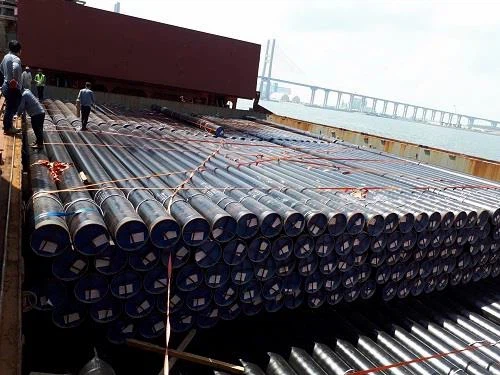

We also offer competitive pricing and fast delivery times. We understand that time is of the essence in many projects, especially those in earthquake - prone areas where quick installation is crucial.
Contact Us for Your X56 Line Pipe Needs
If you're in the market for X56 Line Pipe, whether it's for a seismic - resistant pipeline project or other applications, we'd love to hear from you. Our team is ready to answer all your questions and provide you with a quote. Don't hesitate to reach out and start the conversation about how our X56 Line Pipe can meet your requirements.
References
- API Specification 5L: Specification for Line Pipe, American Petroleum Institute.
- "Seismic Design of Pipelines" by the Pipeline Research Council International.




