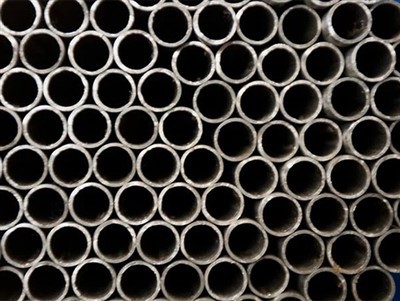

Hey there! As an API 5CT oil tubing supplier, I'm stoked to share with you all the different inspection methods for this crucial product. API 5CT oil tubing is used in the oil and gas industry to transport oil and gas from the wellbore to the surface, so it's super important that it meets high-quality standards. Let's dive right in and explore these inspection methods.
Visual Inspection
First up, we've got visual inspection. This is probably the most basic and straightforward method. It's exactly what it sounds like – you just take a good look at the tubing. We check for any obvious flaws like cracks, dents, scratches, or surface defects. These can weaken the tubing and cause problems down the line, like leaks or even failures.
During a visual inspection, we look at the entire length of the tubing, including the ends. We also check the threading, if there is any. The threads need to be in good condition, with no signs of damage or wear. If we spot any issues during the visual inspection, we'll mark the tubing and decide whether it can be repaired or if it needs to be rejected.
Dimensional Inspection
Next, dimensional inspection is crucial. The dimensions of API 5CT oil tubing need to be within very specific tolerances. We measure things like the outer diameter, inner diameter, wall thickness, and length. Any deviation from the specified dimensions can affect the tubing's performance and compatibility with other components in the oil and gas system.
We use a variety of tools for dimensional inspection, such as calipers, micrometers, and ultrasonic thickness gauges. These tools help us get accurate measurements. For example, the ultrasonic thickness gauge can measure the wall thickness of the tubing without having to cut it open. This is a non-destructive way to check the integrity of the tubing.
Chemical Composition Analysis
The chemical composition of the tubing plays a big role in its properties and performance. We need to make sure that the tubing is made of the right materials and that the chemical composition meets the API 5CT standards.
There are a few different methods for chemical composition analysis. One common method is spectroscopy. This involves using a spectrometer to analyze the light emitted or absorbed by the tubing material. By looking at the specific wavelengths of light, we can determine the elements present in the tubing and their concentrations.
Another method is wet chemical analysis. This is a more traditional method where we take a small sample of the tubing and dissolve it in chemicals. Then we use various chemical reactions and tests to determine the chemical composition. Both methods are effective, but spectroscopy is often faster and more convenient.


Mechanical Property Testing
Mechanical property testing is all about checking how the tubing behaves under different types of stress. This includes tests like tensile testing, hardness testing, and impact testing.
Tensile testing is used to measure the strength and ductility of the tubing. We take a sample of the tubing and pull it until it breaks. During the test, we measure the force applied and the elongation of the sample. This gives us important information about the tubing's ability to withstand tension.
Hardness testing is used to measure the resistance of the tubing to indentation or scratching. There are different types of hardness tests, such as the Brinell test, Rockwell test, and Vickers test. Each test has its own advantages and is used depending on the specific requirements of the tubing.
Impact testing is used to measure the tubing's ability to absorb energy under impact. We use a special machine to strike the tubing with a pendulum or a falling weight. By measuring the energy absorbed during the impact, we can assess the toughness of the tubing.
Non-Destructive Testing (NDT)
Non-destructive testing methods are really important because they allow us to check the internal and surface integrity of the tubing without damaging it. There are several NDT methods that we use for API 5CT oil tubing.
One of the most common NDT methods is ultrasonic testing (UT). This method uses high-frequency sound waves to detect internal flaws in the tubing, such as cracks or voids. The sound waves are sent into the tubing, and if there is a flaw, the waves will reflect back and be detected by a transducer.
Another NDT method is magnetic particle testing (MT). This method is used to detect surface and near-surface flaws in ferromagnetic materials, like most API 5CT oil tubing. We magnetize the tubing and then sprinkle magnetic particles on the surface. If there is a flaw, the magnetic field will be disrupted, and the particles will accumulate at the flaw, indicating its presence.
Eddy current testing (ECT) is also used for NDT. This method uses electromagnetic induction to detect surface and near-surface flaws. It's particularly useful for detecting cracks and corrosion in the tubing.
Hydrostatic Testing
Hydrostatic testing is a pressure test that we use to check the tubing's ability to withstand internal pressure. We fill the tubing with water and then pressurize it to a specified level for a certain period of time. During the test, we monitor the pressure and look for any signs of leakage.
This test is important because it simulates the actual operating conditions of the tubing in the oil and gas well. If the tubing can't withstand the hydrostatic pressure during the test, it's likely to fail in the field.
Ultrasonic Wall Thickness Measurement
Ultrasonic wall thickness measurement is another important inspection method. As I mentioned earlier, we use an ultrasonic thickness gauge to measure the wall thickness of the tubing. This helps us detect any areas of thinning, which could be caused by corrosion or erosion.
By regularly monitoring the wall thickness, we can ensure that the tubing remains in good condition and meets the safety requirements. If the wall thickness falls below the specified minimum, we may need to take corrective action, such as replacing the tubing.
Pressure Testing
In addition to hydrostatic testing, we also perform other types of pressure testing, such as pneumatic testing. Pneumatic testing uses air or gas instead of water to pressurize the tubing. It's often used when the tubing needs to be dry or when water could cause corrosion.
However, pneumatic testing is more dangerous than hydrostatic testing because a sudden release of pressurized gas can be more explosive. So, we need to take extra precautions when performing pneumatic testing.
Quality Control and Traceability
Throughout the inspection process, we also focus on quality control and traceability. We keep detailed records of all the inspections and tests that we perform on the API 5CT oil tubing. This includes the results of the visual inspection, dimensional inspection, chemical composition analysis, mechanical property testing, and NDT.
These records help us ensure that the tubing meets the API 5CT standards and that we can trace the history of each piece of tubing. If there is a problem with the tubing in the field, we can refer to these records to determine the cause and take appropriate action.
Conclusion
So, there you have it – the different inspection methods for API 5CT oil tubing. As a supplier, we take these inspections very seriously because we want to provide our customers with high-quality tubing that meets their needs and keeps their operations running smoothly.
If you're in the market for API 5CT oil tubing, or you're interested in our other products like EN 10216-2 Seamless Steel Tube, Steel Pipes For Water, or Steel Pipes For Borehole, don't hesitate to reach out. We're always here to answer your questions and discuss your requirements. Let's start a conversation and see how we can work together!
References
- API Specification 5CT – Specification for Casing and Tubing
- ASTM Standards related to steel tubing inspection
- ASNT (American Society for Nondestructive Testing) manuals for NDT methods