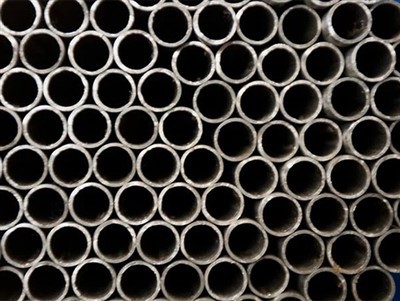

As a supplier of KS D3562 Steel Pipe, ensuring the quality of our products is of utmost importance. On - site testing of these steel pipes is a crucial step to guarantee that they meet the required standards and specifications. In this blog, I will share some effective methods for on - site quality testing of KS D3562 Steel Pipe.
Visual Inspection
Visual inspection is the most basic yet essential step in on - site quality testing. It allows us to quickly identify obvious defects on the surface of the steel pipes. When conducting a visual inspection, we should look for cracks, scratches, pits, and other surface irregularities. Cracks can significantly weaken the structural integrity of the pipe, and even small cracks may expand under stress, leading to pipe failure. Scratches and pits can also act as stress concentrators, increasing the risk of corrosion and fatigue.
We should also check the straightness of the pipe. A bent or warped pipe may not fit properly in the intended application, causing installation difficulties and potential performance issues. Additionally, we need to examine the ends of the pipe. The ends should be cut cleanly and perpendicular to the pipe axis. Any burrs or uneven cuts can affect the connection and sealing of the pipe.
Dimensional Measurement
Accurate dimensional measurement is another key aspect of on - site quality testing. The dimensions of KS D3562 Steel Pipe, such as outer diameter, wall thickness, and length, must comply with the specified standards. We can use tools like calipers, micrometers, and tape measures for dimensional measurement.
For the outer diameter, we should measure at multiple points along the length of the pipe to ensure uniformity. A significant variation in the outer diameter can cause problems in fitting the pipe into connectors or other components. Wall thickness is also a critical dimension. Insufficient wall thickness can lead to reduced strength and pressure - bearing capacity, while excessive wall thickness may increase the weight and cost of the pipe without adding significant benefits.
Length measurement is relatively straightforward, but it is still necessary to ensure that the pipes are within the acceptable tolerance range. Incorrect pipe lengths can result in improper installation and waste of materials.
Non - Destructive Testing (NDT)
Non - destructive testing methods are used to detect internal defects in the steel pipes without damaging them. There are several common NDT methods that can be applied on - site for KS D3562 Steel Pipe.
Ultrasonic Testing (UT)
Ultrasonic testing is a widely used NDT method for detecting internal flaws such as cracks, porosity, and inclusions in the steel pipes. In UT, high - frequency sound waves are transmitted into the pipe, and any reflections from internal defects are detected and analyzed. The principle behind UT is that sound waves travel through the material at a constant speed, and when they encounter a defect, a portion of the sound wave is reflected back to the transducer. By analyzing the reflected waves, we can determine the location, size, and nature of the defect.
Magnetic Particle Testing (MT)
Magnetic particle testing is suitable for detecting surface and near - surface defects in ferromagnetic materials, which includes most KS D3562 Steel Pipes. In MT, a magnetic field is applied to the pipe, and magnetic particles are then applied to the surface. If there is a defect on or near the surface, the magnetic field will be distorted, causing the magnetic particles to accumulate at the defect site, making it visible. This method is relatively simple and cost - effective, but it can only detect defects close to the surface.
Eddy Current Testing (ET)
Eddy current testing is based on the principle of electromagnetic induction. When an alternating current is passed through a coil placed near the surface of the steel pipe, eddy currents are induced in the pipe. Any changes in the electrical conductivity or magnetic permeability of the pipe, such as those caused by defects, will affect the eddy currents. By measuring the changes in the eddy currents, we can detect surface and near - surface defects. Eddy current testing is fast and sensitive, but it is mainly used for detecting surface - breaking defects.
Pressure Testing
Pressure testing is a crucial test to ensure the pressure - bearing capacity of the KS D3562 Steel Pipe. There are two main types of pressure testing: hydrostatic testing and pneumatic testing.
Hydrostatic Testing
Hydrostatic testing involves filling the pipe with water and then applying pressure to the water inside the pipe. The pressure is typically maintained for a certain period, usually 5 - 10 minutes, to check for any leaks or deformation. Hydrostatic testing is considered a more reliable method because water is incompressible, and any pressure drop during the test indicates a leak. It is also safer than pneumatic testing because the energy released in case of a failure is much lower.
Pneumatic Testing
Pneumatic testing uses compressed air or gas instead of water. It is faster and more convenient than hydrostatic testing, especially for large - diameter pipes or pipes that are difficult to drain. However, pneumatic testing is more dangerous because the energy stored in the compressed gas is much higher than that in water. In case of a pipe failure, the gas can cause a violent explosion. Therefore, strict safety precautions must be taken when conducting pneumatic testing.
Comparison with Similar Products
It is also beneficial to compare KS D3562 Steel Pipe with similar products in the market, such as JIS G3454 Carbon Steel Pipe, ASTM A500 Square Steel Tube, and EN 10210 - 3 Structural Hollow Sections. By comparing the quality, performance, and price of these products, we can better understand the advantages and disadvantages of KS D3562 Steel Pipe. This comparison can also help customers make more informed decisions when choosing the right steel pipe for their projects.
Conclusion
On - site quality testing of KS D3562 Steel Pipe is a comprehensive process that involves visual inspection, dimensional measurement, non - destructive testing, and pressure testing. By following these testing methods, we can ensure that our steel pipes meet the highest quality standards and provide reliable performance in various applications.
If you are interested in our KS D3562 Steel Pipe or have any questions about the quality testing process, please feel free to contact us for further discussion and potential procurement. We are committed to providing you with the best products and services.


References
- "Steel Pipe Testing Standards and Methods", American Society for Testing and Materials (ASTM)
- "Non - Destructive Testing Handbook", American Society for Nondestructive Testing (ASNT)
- "Pressure Testing of Piping Systems", International Association of Plumbing and Mechanical Officials (IAPMO)