


As a supplier of ASTM A335 Alloy Steel Pipe, I've witnessed firsthand the intricate relationship between vanadium content and the properties of this remarkable material. Vanadium, a transition metal, plays a crucial role in enhancing the performance of ASTM A335 alloy steel pipes, making them suitable for a wide range of applications in various industries. In this blog, I'll delve into how different vanadium contents can affect the properties of ASTM A335 alloy steel pipes, and why this matters for your projects.
Understanding ASTM A335 Alloy Steel Pipe
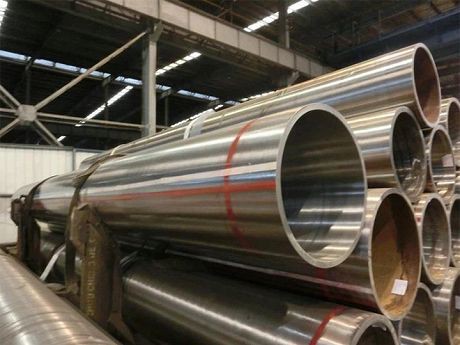
Before we explore the impact of vanadium, let's briefly understand what ASTM A335 alloy steel pipe is. ASTM A335 is a standard specification for seamless ferritic alloy - steel pipe for high - temperature service. These pipes are commonly used in power generation, petrochemical, and other industries where high - temperature and high - pressure conditions are prevalent. The alloying elements in ASTM A335 steel pipes are carefully selected to provide the necessary strength, toughness, and corrosion resistance at elevated temperatures.
The Role of Vanadium in Alloy Steel
Vanadium is a powerful alloying element in steel. It has a strong affinity for carbon and nitrogen, forming fine carbides and nitrides within the steel matrix. These precipitates have a significant impact on the mechanical and physical properties of the steel.
Strength and Hardness
One of the primary effects of vanadium on ASTM A335 alloy steel pipes is the improvement of strength and hardness. When vanadium forms carbides and nitrides, these particles act as obstacles to the movement of dislocations in the steel. Dislocations are defects in the crystal structure of the metal, and their movement is responsible for plastic deformation. By impeding dislocation movement, vanadium - containing precipitates make it more difficult for the steel to deform, thereby increasing its strength and hardness.
As the vanadium content increases, the number of these strengthening precipitates also increases. This leads to a corresponding increase in the yield strength and ultimate tensile strength of the ASTM A335 alloy steel pipe. For applications where high strength is required, such as in high - pressure steam lines in power plants, a higher vanadium content can be beneficial. However, it's important to note that an excessive increase in vanadium content can lead to brittleness, which we'll discuss later.
Grain Refinement
Vanadium also plays a crucial role in grain refinement. During the solidification and heat treatment processes of the steel, vanadium carbides and nitrides can act as nucleation sites for new grains. This results in a finer grain structure in the steel. A fine - grained structure offers several advantages. Firstly, it improves the toughness of the steel. Fine grains can more effectively absorb and dissipate energy during deformation, reducing the likelihood of crack propagation. Secondly, a fine - grained structure enhances the creep resistance of the steel at high temperatures. Creep is the slow, time - dependent deformation of a material under a constant load at elevated temperatures. A finer grain structure can resist creep deformation better, making the ASTM A335 alloy steel pipe more suitable for long - term high - temperature applications.
Corrosion Resistance
Although vanadium is not typically considered a major corrosion - resistant element like chromium or nickel, it can still have a positive impact on the corrosion resistance of ASTM A335 alloy steel pipes. The fine carbides and nitrides formed by vanadium can help to passivate the steel surface, creating a protective layer that inhibits the onset of corrosion. Additionally, the improved strength and toughness provided by vanadium can prevent the formation and propagation of corrosion - induced cracks, further enhancing the overall corrosion resistance of the pipe.
Effects of Different Vanadium Contents
Low Vanadium Content (Less than 0.1%)
In ASTM A335 alloy steel pipes with a low vanadium content (less than 0.1%), the strengthening and grain - refining effects of vanadium are relatively limited. These pipes may have lower strength and hardness compared to those with higher vanadium contents. However, they also tend to have better ductility and weldability. Low - vanadium ASTM A335 pipes are often used in applications where ease of fabrication and moderate strength requirements are the main considerations. For example, they can be used in some low - pressure steam lines or in general - purpose piping systems where the operating conditions are not extremely harsh.
Medium Vanadium Content (0.1% - 0.3%)
Pipes with a medium vanadium content (0.1% - 0.3%) strike a good balance between strength, toughness, and other properties. The vanadium - containing precipitates in these pipes provide a significant increase in strength and hardness while still maintaining reasonable ductility. The grain - refining effect is also more pronounced, resulting in improved creep resistance and toughness. Medium - vanadium ASTM A335 alloy steel pipes are widely used in power generation and petrochemical industries, where they are exposed to high - temperature and high - pressure conditions for extended periods.
High Vanadium Content (Greater than 0.3%)
ASTM A335 alloy steel pipes with a high vanadium content (greater than 0.3%) have extremely high strength and hardness. However, this comes at the cost of reduced ductility and increased brittleness. The high density of vanadium carbides and nitrides can make the steel more prone to cracking, especially during welding or in applications where sudden impact loads may occur. High - vanadium pipes are typically used in very specific applications where extremely high strength is required, such as in some high - performance aerospace or military applications.
Considerations for Selecting the Right Vanadium Content
When selecting ASTM A335 alloy steel pipes, it's crucial to consider the specific requirements of your application. If your project requires high strength and good creep resistance at elevated temperatures, a medium - vanadium content pipe may be the best choice. On the other hand, if ease of fabrication and moderate strength are more important, a low - vanadium pipe may be more suitable.
It's also important to note that the vanadium content is just one of many factors that affect the properties of ASTM A335 alloy steel pipes. Other alloying elements, heat treatment processes, and manufacturing techniques can also have a significant impact on the final performance of the pipe.
Related Products
If you're interested in other types of alloy steel tubes, we also offer ASTM A213 Alloy Steel Tube and ASTM A423 Low Alloy Steel Economizer Tubes. These products are designed to meet different application requirements and offer a wide range of properties.

Conclusion
In conclusion, the vanadium content has a profound impact on the properties of ASTM A335 alloy steel pipes. By carefully controlling the vanadium content, we can tailor the strength, hardness, toughness, and corrosion resistance of the pipes to meet the specific needs of different applications. As a supplier of ASTM A335 Alloy Steel Pipe, I'm committed to providing high - quality products that meet the highest industry standards. If you have any questions or need further information about our ASTM A335 alloy steel pipes, or if you're interested in starting a procurement discussion, please don't hesitate to reach out. We're here to help you find the best solution for your project.
References
- ASM Handbook Volume 1: Properties and Selection: Irons, Steels, and High - Performance Alloys.
- ASTM International Standards for Steel Pipes and Tubes.
- Research papers on the effect of alloying elements on the properties of steel.


