


In the realm of infrastructure and industrial applications, anti - corrosion pipes play a pivotal role. As a leading anti - corrosion pipe supplier, I've witnessed firsthand the evolution of this industry and am eager to share insights into its future development trends.
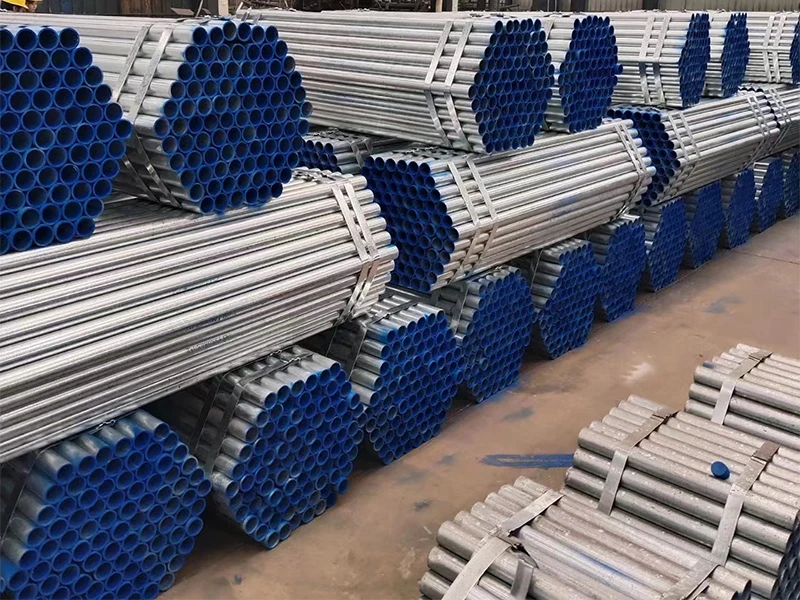

1. Technological Advancements in Coating Materials
The heart of anti - corrosion pipes lies in their coating materials. Traditional coating methods such as hot - dip galvanizing have long been reliable, but the future will see a shift towards more advanced and high - performance coatings.
Nanocomposite coatings are emerging as a game - changer. These coatings combine nanoparticles with traditional polymers, offering enhanced protection against corrosion. Nanoparticles can fill in microscopic pores in the coating, preventing the penetration of corrosive agents. For example, adding silica nanoparticles to epoxy coatings can significantly improve their barrier properties. Research has shown that nanocomposite coatings can extend the service life of pipes in harsh environments by up to 50%.
Another promising area is the development of self - healing coatings. These coatings can repair themselves when damaged, maintaining their anti - corrosion properties over time. They work through the incorporation of microcapsules filled with healing agents. When the coating is scratched, the microcapsules rupture, releasing the healing agents to seal the damaged area. This technology is still in its early stages but holds great potential for the future of anti - corrosion pipes.
2. Environmental Sustainability
In today's world, environmental concerns are at the forefront of every industry, and the anti - corrosion pipe sector is no exception. There is a growing demand for eco - friendly coating materials and manufacturing processes.
Water - based coatings are becoming increasingly popular as an alternative to solvent - based coatings. Solvent - based coatings often contain volatile organic compounds (VOCs), which are harmful to the environment and human health. Water - based coatings, on the other hand, have lower VOC emissions, making them a more sustainable choice. They also offer good anti - corrosion performance and are compatible with a wide range of pipe materials.
Recycling and reuse of anti - corrosion pipes are also important trends. As the demand for new pipes continues to grow, finding ways to recycle old and damaged pipes can reduce the environmental impact of the industry. Some companies are already exploring methods to strip old coatings from pipes and recoat them for reuse. This not only conserves resources but also reduces waste.
3. Smart and Sensor - Enabled Pipes
The era of the Internet of Things (IoT) has reached the anti - corrosion pipe industry. Smart pipes equipped with sensors are set to revolutionize the way we monitor and maintain pipe systems.
These sensors can detect various parameters such as corrosion rate, temperature, pressure, and flow rate in real - time. By continuously monitoring these parameters, operators can identify potential problems before they become serious. For example, if a sensor detects an increase in the corrosion rate at a particular section of a pipe, maintenance teams can be dispatched immediately to address the issue. This proactive approach can prevent costly pipe failures and downtime.
In addition to monitoring, smart pipes can also communicate with other components in the pipeline system. They can adjust their operation based on the data collected, optimizing the overall performance of the system. For instance, if the flow rate in a pipe is too high, the smart pipe can adjust its internal diameter to regulate the flow.
4. Customization and Specialization
As industries become more diverse, the demand for customized anti - corrosion pipes is on the rise. Different applications require pipes with specific properties, such as resistance to certain chemicals, high - temperature resistance, or flexibility.
For the oil and gas industry, pipes need to withstand high pressures and corrosive substances such as hydrogen sulfide. API 5L Epoxy Lined 3pe Anti - corrosion Steel Pipe is designed specifically for this purpose. It has an epoxy lining and a 3PE outer coating, providing excellent protection against corrosion in harsh oil and gas environments.
In the construction industry, pipes may need to be lightweight and easy to install. ASTM A501 Carbon Steel Tube is a popular choice due to its good strength - to - weight ratio and ease of fabrication.
In the water supply and drainage systems, pipes need to be resistant to biofouling and scale formation. Custom - coated pipes can be developed to meet these specific requirements.
5. International Standards and Regulations
With the globalization of the anti - corrosion pipe market, international standards and regulations are becoming more important. These standards ensure the quality and safety of pipes, facilitating trade between different countries.
Organizations such as the International Organization for Standardization (ISO) and the American Society for Testing and Materials (ASTM) are constantly updating their standards for anti - corrosion pipes. Manufacturers need to comply with these standards to enter the global market. For example, BS1387 Hot Galvanized Steel Pipe adheres to the British Standard BS1387, which specifies the requirements for hot - dip galvanized steel pipes for use in various applications.
Regulations regarding environmental protection and worker safety are also becoming more stringent. Manufacturers need to ensure that their production processes and products meet these regulatory requirements.
Conclusion
The future of anti - corrosion pipes is filled with exciting opportunities and challenges. Technological advancements, environmental sustainability, smart technology, customization, and international standards will shape the industry in the coming years.
As a supplier of anti - corrosion pipes, we are committed to staying at the forefront of these trends. We invest in research and development to offer our customers the latest and most advanced anti - corrosion solutions. Whether you are in the oil and gas, construction, or water supply industry, we have the expertise and products to meet your specific needs.
If you are interested in learning more about our anti - corrosion pipes or would like to discuss a potential project, we invite you to contact us for procurement and negotiation. Our team of experts is ready to assist you in finding the perfect pipe solution for your application.
References
- Jones, D. A. (2019). Principles and Prevention of Corrosion. Pearson.
- Uhlig, H. H., & Revie, R. W. (2019). Corrosion and Corrosion Control: An Introduction to Corrosion Science and Engineering. Wiley.
- Melchers, R. E., & Jeffrey, R. (2018). Corrosion of Steel in Concrete: Prevention, Diagnosis, Repair. Wiley.




