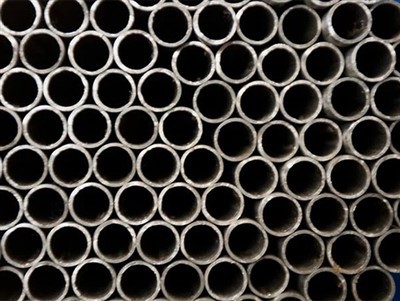

Hey there! I'm a supplier of JIS G3441 Alloy Steel Tube, and today I wanna chat about one of the key properties of this awesome material: the Poisson's ratio.
First off, let's quickly understand what Poisson's ratio is. When you apply a force to a material in one direction, it not only deforms in that direction but also in the perpendicular directions. Poisson's ratio is the ratio of the transverse strain (deformation in the perpendicular direction) to the axial strain (deformation in the direction of the applied force). In simpler terms, it tells us how much a material will "squish" or "bulge" sideways when it's being stretched or compressed.
Now, getting to the Poisson's ratio of JIS G3441 Alloy Steel Tube. Alloy steels, in general, have Poisson's ratios that typically fall within a certain range. For most steels, including the JIS G3441 Alloy Steel Tube, the Poisson's ratio is around 0.3. This value is based on a lot of research and testing done on similar steel materials.
The reason why this value is important is that it has a big impact on how the tube behaves in different applications. For example, if you're using the JIS G3441 Alloy Steel Tube in a structural application where it's being loaded in tension or compression, the Poisson's ratio will affect how the tube distorts and how it interacts with other components. A higher Poisson's ratio means more lateral deformation, which could potentially lead to issues like buckling or interference with neighboring parts.
Let's say you're building a framework using these tubes. When you apply a load to the tubes, they'll stretch or compress along the axis of the load. But at the same time, they'll also change shape in the perpendicular directions according to the Poisson's ratio. If you haven't accounted for this lateral deformation, it could cause problems down the line, like misalignment or even failure of the structure.
Another aspect where the Poisson's ratio matters is in manufacturing processes. When you're bending or forming the JIS G3441 Alloy Steel Tube, the Poisson's ratio affects how the tube will respond to the applied forces. Understanding this property helps in ensuring that the final product meets the required specifications and has the desired shape and dimensions.
Now, compared to other types of alloy steel tubes, like the ASTM A209 Seamless Alloy Tube and the ASTM A213 Alloy Steel Tube, the Poisson's ratio of the JIS G3441 Alloy Steel Tube is quite similar. Most alloy steels have Poisson's ratios in the range of 0.28 - 0.32. This consistency across different steel alloys is actually quite useful because it allows engineers and designers to use similar design principles and calculations when working with these materials.


However, it's important to note that the exact Poisson's ratio of a JIS G3441 Alloy Steel Tube can vary slightly depending on factors like the specific chemical composition of the alloy, the manufacturing process, and the heat treatment it has undergone. For example, if the tube has a higher carbon content or certain alloying elements, it could potentially have a slightly different Poisson's ratio.
In my experience as a supplier, I've seen how important it is for customers to have a good understanding of the Poisson's ratio of the JIS G3441 Alloy Steel Tube. It helps them make informed decisions about their projects and ensures that they're using the right material for the job. Whether you're an engineer designing a new structure or a manufacturer looking for the best tubing for your product, knowing the Poisson's ratio can save you a lot of headaches in the long run.
If you're in the market for high - quality JIS G3441 Alloy Steel Tube, you've come to the right place. Our tubes are made to the highest standards, and we can provide you with detailed information about their properties, including the Poisson's ratio. We work closely with our customers to understand their specific needs and ensure that they get the best product for their applications.
Whether you need a small quantity for a prototype or a large order for a big project, we've got you covered. Our team of experts is always ready to answer your questions and provide you with technical support. So, if you're interested in purchasing JIS G3441 Alloy Steel Tube, don't hesitate to reach out and start a conversation. We're looking forward to working with you on your next project!
References:
- "Materials Science and Engineering: An Introduction" by William D. Callister Jr. and David G. Rethwisch
- Various industry research papers on the mechanical properties of alloy steels