


Hey there! As a supplier of ASTM A512 Mechanical Tube, I often get asked about the heat treatment process for these tubes. So, I thought I'd take a moment to break it down for you.
First things first, let's talk about what ASTM A512 Mechanical Tube is. These tubes are made to be used in mechanical and general engineering applications. They're normally welded and cold-drawn. And they've got to meet the requirements set by the ASTM A512 standard, which spells out the chemical composition, mechanical properties, and other important details.
Now, onto the heat treatment process. Heat treatment is a crucial step when making ASTM A512 Mechanical Tube. It helps to enhance the tube's mechanical properties, like hardness, strength, and ductility. There are several main heat treatment processes used for these tubes: annealing, normalizing, quenching, and tempering.
Annealing
Annealing is a process that involves heating the tube to a specific temperature, holding it there for a set period, and then slowly cooling it. This helps to relieve internal stresses that build up during manufacturing, like cold working or welding. By doing this, annealing can improve the tube's machinability and ductility. It makes the metal softer and more workable.
The annealing process for ASTM A512 Mechanical Tube usually has these steps:
- Heating: The tube is heated to a temperature between 1,400°F and 1,600°F (760°C - 870°C). This temperature range is chosen based on the tube's chemical composition and the desired properties.
- Soaking: Once the tube reaches the target temperature, it's held there for a certain amount of time. This gives the metal enough time to undergo the necessary structural changes. The soaking time depends on the tube's thickness and the type of annealing being done.
- Cooling: After soaking, the tube is slowly cooled. This can be done in the furnace by reducing the heat over time or by burying the tube in a heat-insulating material like sand or ashes. Slow cooling is crucial to prevent the formation of new internal stresses.
Normalizing
Normalizing is a heat treatment process similar to annealing, but with some differences. Like annealing, it involves heating the tube to a specific temperature and holding it there for a while. However, instead of slow cooling, the tube is cooled in still air. This quicker cooling rate makes the tube harder and stronger than if it were annealed.
The normalizing process for ASTM A512 Mechanical Tube includes these steps:
- Heating: The tube is heated to a temperature above its upper critical temperature, usually between 1,500°F and 1,650°F (815°C - 900°C).
- Soaking: The tube is held at the target temperature for a set length of time to ensure uniform heating.
- Cooling: After soaking, the tube is removed from the furnace and cooled in still air. This rapid cooling hardens the metal and improves its mechanical properties.
Normalizing is often used to refine the grain structure of the tube, which in turn can enhance its strength and toughness.
Quenching
Quenching is a rapid cooling process that involves heating the tube to a high temperature and then quickly cooling it in a quenching medium, like water, oil, or a polymer solution. This fast cooling creates a hard, martensitic structure in the tube, which significantly increases its hardness and strength.
The quenching process for ASTM A512 Mechanical Tube goes like this:
- Heating: The tube is heated to a temperature above its upper critical temperature, typically in the range of 1,550°F to 1,650°F (845°C - 900°C).
- Soaking: It's held at the target temperature for a specific time to ensure complete austenitization.
- Quenching: The tube is then rapidly cooled by immersing it in the quenching medium. The choice of quenching medium depends on the tube's size, shape, and the desired properties.
However, quenching can also cause internal stresses and make the tube brittle. That's why it's often followed by tempering.
Tempering
Tempering is a process that follows quenching. It involves heating the quenched tube to a temperature below its lower critical temperature and holding it there for a period of time before cooling it. Tempering helps to reduce the internal stresses created during quenching and improve the tube's ductility and toughness.
The tempering process for ASTM A512 Mechanical Tube has these steps:
- Heating: The tube is heated to a temperature between 300°F and 1,200°F (150°C - 650°C), depending on the desired properties.
- Soaking: It's held at the target temperature for a specified time to allow the internal stresses to relieve and for the martensite to transform into a more ductile structure.
- Cooling: After soaking, the tube is cooled at a controlled rate, usually in still air.
Tempering can be adjusted to achieve different levels of hardness, strength, and toughness in the tube.
Why Heat Treatment Matters
The heat treatment process is super important for ASTM A512 Mechanical Tube. It allows manufacturers to customize the tube's mechanical properties to meet the specific needs of different applications. For example, a tube used in a high-stress application might need to be quenched and tempered to achieve maximum strength, while a tube used in a machining application might be annealed to improve its machinability.

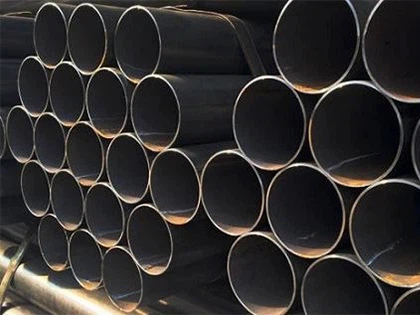
As a supplier, we take great care to ensure that all our ASTM A512 Mechanical Tubes go through the proper heat treatment process. We work with experienced manufacturers who follow strict quality control measures to guarantee that the tubes meet all the relevant standards.
Other Related Tubing Standards
If you're interested in learning more about different types of tubing, you might want to check out these other standards: ASTM A618 High-Strength Structural Tubing, EN 10217 Welded Steel Pipe for Pressure Purpose, and EN 10219-1 Structural Hollow Sections. These standards cover different types of tubing with their own unique properties and applications.
Let's Talk
Whether you're in the market for ASTM A512 Mechanical Tube or just want to learn more about heat treatment processes, I'm here to help. If you have any questions or are looking to make a purchase, don't hesitate to reach out. We're committed to providing high-quality products and excellent customer service.
References
- ASTM International. ASTM A512 Standard Specification for Cold-Drawn Welded Carbon Steel Mechanical Tubing.
- ASM Handbook Committee. ASM Handbook Volume 4: Heat Treating.




