


Hey there! As a supplier of ASTM A335 Alloy Steel Pipe, I often get asked about the difference between ASTM A335 and API 5L alloy steel pipes. So, I thought I'd break it down in this blog post to help you understand which one might be the best fit for your project.
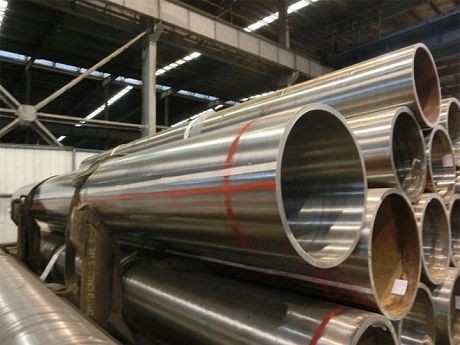

What are ASTM A335 and API 5L Alloy Steel Pipes?
Let's start with a quick intro. ASTM A335 alloy steel pipes are mainly used for high - temperature services in power plants, refineries, and other industrial applications. They're designed to handle extreme heat and pressure conditions. On the other hand, API 5L alloy steel pipes are more commonly used in the oil and gas industry, for transporting oil, gas, and other petroleum products over long distances.
Chemical Composition
One of the key differences between the two lies in their chemical composition. ASTM A335 pipes come in various grades like P1, P5, P9, P11, P22, etc. Each grade has a different alloying element content to provide specific properties. For example, Grade P11 contains around 1.00 - 1.50% chromium and 0.44 - 0.65% molybdenum, which gives it good high - temperature strength and corrosion resistance.
API 5L pipes also come in different grades such as X42, X52, X60, etc. These pipes typically have a lower alloy content compared to ASTM A335. They are primarily carbon - manganese alloy steels with small amounts of other elements to enhance strength and toughness. The focus here is more on the ability to withstand the internal pressure of the fluid being transported and resist corrosion from the surrounding environment.
Mechanical Properties
When it comes to mechanical properties, ASTM A335 pipes are engineered to have excellent high - temperature strength and creep resistance. Creep is the tendency of a material to deform slowly under a constant load at high temperatures. In applications like steam lines in power plants, where pipes are exposed to high temperatures for long periods, ASTM A335 pipes can maintain their shape and integrity.
API 5L pipes, on the other hand, are designed to have high tensile strength and good ductility. Tensile strength is the maximum stress a material can withstand while being pulled or stretched. Ductility allows the pipes to bend and deform without breaking during installation and operation, which is crucial for pipelines that may need to navigate through various terrains.
Manufacturing Process
The manufacturing process for these two types of pipes also differs. ASTM A335 pipes are usually produced through seamless manufacturing processes. Seamless pipes are made by piercing a solid billet of steel to create a hollow tube. This results in a pipe with a uniform structure and no weak points along the seam, which is important for high - pressure and high - temperature applications.
API 5L pipes can be either seamless or welded. Welded API 5L pipes are made by rolling a steel plate into a tubular shape and then welding the seam. Welded pipes are often more cost - effective for large - diameter pipelines. However, seamless API 5L pipes are preferred in some critical applications where the risk of weld failure needs to be minimized.
Application Areas
As mentioned earlier, ASTM A335 pipes find their use in high - temperature and high - pressure applications. They are commonly used in power generation plants for boiler tubes, superheaters, and reheaters. In the petrochemical industry, they are used in furnaces and heat exchangers. You can also check out our ASTM A209 Seamless Alloy Tube for related high - temperature applications.
API 5L pipes are the go - to choice for oil and gas transmission. They are used in on - shore and off - shore pipelines, as well as in well - head equipment. Their ability to handle the pressure of the transported fluids and resist corrosion makes them ideal for the harsh conditions of the oil and gas industry. If you're looking for an Alloy Tube Distributor for your oil and gas projects, you've come to the right place!
Testing and Certification
Both ASTM A335 and API 5L pipes are subject to strict testing and certification procedures. ASTM A335 pipes must meet the requirements of the ASTM A335 standard, which includes tests for chemical composition, mechanical properties, and dimensional accuracy. These tests ensure that the pipes can perform safely under high - temperature and high - pressure conditions.
API 5L pipes must comply with the API 5L specification, which has its own set of quality control and testing requirements. This includes non - destructive testing methods like ultrasonic testing and radiography to detect any internal flaws in the pipes. The certification for API 5L pipes is a sign of their reliability and suitability for the oil and gas industry.
Cost Considerations
When it comes to cost, several factors come into play. ASTM A335 pipes, due to their higher alloy content and the manufacturing process for high - performance applications, tend to be more expensive. The cost of producing seamless pipes and the additional testing required for high - temperature and high - pressure applications add to the overall price.
API 5L pipes can vary in cost depending on whether they are seamless or welded. Welded API 5L pipes are generally more affordable, especially for large - scale projects. However, seamless API 5L pipes can be comparable in cost to some grades of ASTM A335 pipes, especially when considering the long - term reliability and performance requirements of the project.
Choosing the Right Pipe
So, how do you decide which pipe is right for your project? If you're dealing with high - temperature and high - pressure applications like power generation or petrochemical processing, ASTM A335 pipes are likely the better choice. They offer the necessary strength and corrosion resistance under extreme conditions. You can explore our wide range of ASTM A335 Alloy Steel Pipe to find the grade that suits your needs.
If you're in the oil and gas industry and need to transport fluids over long distances, API 5L pipes are a great option. Whether it's a welded pipe for a cost - effective solution or a seamless pipe for critical applications, API 5L has you covered.
Conclusion
In conclusion, ASTM A335 and API 5L alloy steel pipes have distinct differences in terms of chemical composition, mechanical properties, manufacturing process, application areas, testing, and cost. Understanding these differences is crucial for selecting the right pipe for your project. As a supplier of ASTM A335 Alloy Steel Pipe, I'm here to help you make an informed decision. If you have any questions or are interested in purchasing pipes for your project, feel free to reach out. We can discuss your specific requirements and provide you with the best solution.
References
- ASTM International. ASTM A335/A335M - 21 Standard Specification for Seamless Ferritic Alloy - Steel Pipe for High - Temperature Service.
- American Petroleum Institute. API Specification 5L, Specification for Line Pipe.




