


What are the anti - corrosion measures for pipe joints?
Pipe joints are critical components in piping systems, and their corrosion resistance directly affects the overall performance and service life of the system. As an anti - corrosion pipe supplier, I have in - depth knowledge and rich experience in this area. In this blog, I will discuss various anti - corrosion measures for pipe joints.
1. Coating Protection
Coating is one of the most common and effective anti - corrosion measures for pipe joints. Different types of coatings can be used according to the specific application environment and requirements.
Epoxy Coating
Epoxy coatings offer excellent chemical resistance and adhesion. They can form a dense protective film on the surface of pipe joints, preventing corrosive substances such as water, oxygen, and chemicals from contacting the metal surface. For example, our API 5L Epoxy Lined 3pe Anti - corrosion Steel Pipe uses epoxy lining technology, which not only provides anti - corrosion protection for the pipe body but also can be extended to the joints. The epoxy coating can withstand a wide range of temperatures and pressures, making it suitable for various industrial applications, including oil and gas transportation, water treatment, and chemical processing.
Polyethylene Coating
Polyethylene (PE) coating is another popular choice. It has good flexibility, impact resistance, and weather resistance. 3PE (three - layer polyethylene) coating is a common multi - layer coating system. The first layer is an epoxy primer, which provides good adhesion to the metal surface; the second layer is an adhesive layer, which enhances the bonding between the epoxy primer and the outer polyethylene layer; the third layer is a thick polyethylene layer, which acts as a physical barrier against corrosion. This coating system is widely used in buried pipelines, as it can effectively protect the pipe joints from soil corrosion and moisture penetration.
Zinc - based Coatings
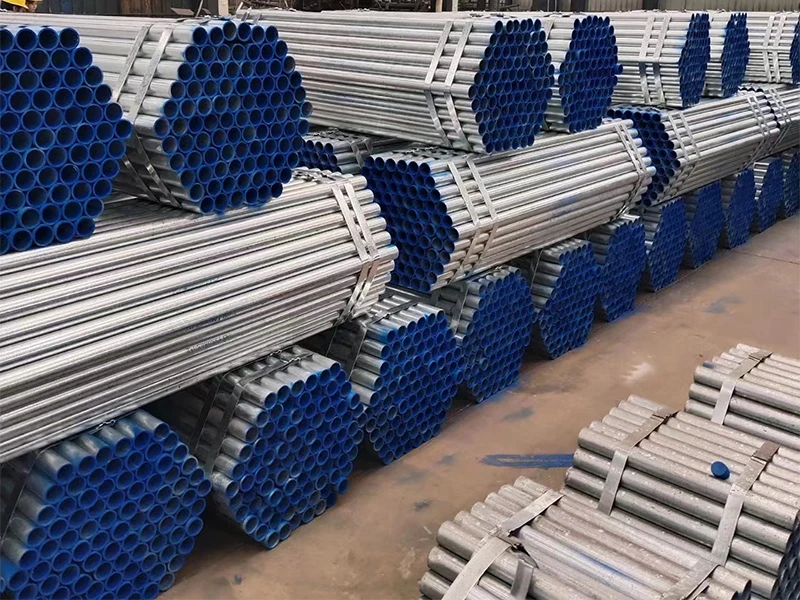
Zinc - based coatings, such as hot - dip galvanizing, are also widely used for pipe joints. Hot - dip galvanizing involves immersing the pipe joints in a bath of molten zinc, forming a zinc - iron alloy layer on the surface. This layer acts as a sacrificial anode, corroding preferentially to protect the underlying steel. Our BS1387 Hot Galvanized Steel Pipe is a typical example of using hot - dip galvanizing technology. It is suitable for outdoor applications, such as building structures, fencing, and water supply systems, where the pipe joints are exposed to the atmosphere and may be subject to mild corrosion.
2. Cathodic Protection
Cathodic protection is a method of preventing corrosion by making the metal surface the cathode of an electrochemical cell. There are two main types of cathodic protection: sacrificial anode cathodic protection and impressed current cathodic protection.
Sacrificial Anode Cathodic Protection
In sacrificial anode cathodic protection, a more active metal (such as magnesium, zinc, or aluminum) is connected to the pipe joint. The sacrificial anode corrodes preferentially, releasing electrons to the pipe joint and making it cathodic. This method is relatively simple and cost - effective, and it is suitable for small - scale or buried pipe systems. For example, in a water distribution system, magnesium anodes can be installed at the pipe joints to protect them from corrosion.
Impressed Current Cathodic Protection
Impressed current cathodic protection uses an external power source to supply a direct current to the pipe joint, making it cathodic. This method is more suitable for large - scale or high - risk pipe systems, such as offshore oil and gas pipelines. An impressed current cathodic protection system typically consists of an anode bed, a power supply, and control equipment. The anode bed is usually made of high - silicon cast iron or graphite, which can withstand the high current density required for protection.
3. Proper Joint Design and Installation
The design and installation of pipe joints also play an important role in anti - corrosion.
Sealing Design
Proper sealing is essential to prevent the ingress of corrosive substances into the pipe joints. Gaskets made of rubber or other sealing materials can be used to create a tight seal between the pipe ends. For example, in a flange joint, a rubber gasket can be placed between the flanges to prevent leakage of fluids and the entry of moisture and oxygen.
Welding Quality
In welded pipe joints, high - quality welding is crucial for anti - corrosion. Poor welding can lead to defects such as porosity, cracks, and incomplete fusion, which can become sites for corrosion initiation. Welders should be properly trained and follow strict welding procedures to ensure the integrity of the weld. After welding, the weld area should be inspected and treated, such as grinding and coating, to improve its anti - corrosion performance.
Avoiding Crevice Corrosion
Crevice corrosion can occur in narrow gaps or crevices between pipe joints. To avoid this, the joint design should minimize the formation of crevices. For example, using smooth - surface pipe ends and proper joint configurations can reduce the risk of crevice corrosion.
4. Environmental Control
Controlling the environment around the pipe joints can also help prevent corrosion.
pH and Temperature Control
In some industrial processes, the pH and temperature of the fluid flowing through the pipes can affect the corrosion rate. By adjusting the pH value and temperature within a suitable range, the corrosion of pipe joints can be reduced. For example, in a water treatment plant, the pH of the water can be adjusted to a slightly alkaline level to reduce the corrosion of steel pipes.
Removal of Corrosive Substances
If the fluid contains corrosive substances such as oxygen, sulfur compounds, or chlorides, these substances should be removed or reduced. For example, in an oil and gas pipeline, desulfurization and deoxygenation processes can be used to reduce the corrosion of pipe joints.
5. Regular Inspection and Maintenance
Regular inspection and maintenance are essential to ensure the long - term anti - corrosion performance of pipe joints.
Visual Inspection
Visual inspection can be used to detect obvious signs of corrosion, such as rust, pitting, or cracking. Inspectors should check the pipe joints regularly, especially in areas where corrosion is more likely to occur, such as the welds, gaskets, and areas exposed to the atmosphere or corrosive fluids.
Non - destructive Testing
Non - destructive testing methods such as ultrasonic testing, magnetic particle testing, and radiographic testing can be used to detect internal defects in the pipe joints. These methods can help identify potential corrosion problems before they cause serious damage.
Maintenance and Repair
If corrosion is detected, appropriate maintenance and repair measures should be taken in a timely manner. This may include cleaning the corroded area, applying new coatings, or replacing damaged components.

In conclusion, anti - corrosion of pipe joints requires a comprehensive approach, including coating protection, cathodic protection, proper joint design and installation, environmental control, and regular inspection and maintenance. As an anti - corrosion pipe supplier, we are committed to providing high - quality anti - corrosion pipes and solutions to meet the diverse needs of our customers. If you are interested in our products or need more information about anti - corrosion measures for pipe joints, please feel free to contact us for procurement and negotiation.
References
- Fontana, M. G. (1986). Corrosion Engineering. McGraw - Hill.
- Uhlig, H. H., & Revie, R. W. (1985). Corrosion and Corrosion Control. Wiley - Interscience.
- NACE International. (2016). NACE International Standards. NACE International.




